 |
A major dam outside Houston has begun spilling over as Storm Harvey pushes the reservoir past capacity, Texas officials say.
But flood control official Jeff Lindner says water levels are now over the height of the reservoir edge.
Harvey has brought huge floods to Texas and is starting to affect Louisiana.
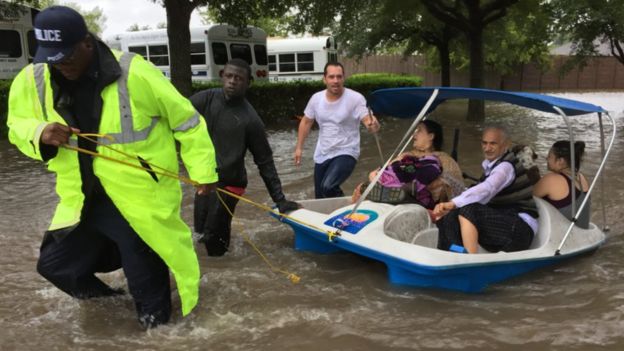
Unprecedented rainfall has forced thousands of people to flee their homes while rescuers are trying to reach others that remain stranded.
At least nine people are reported to have died in the Houston area. Six members of the same family died trying to flee rising floodwaters, relatives told US media.
While spillover would not cause the Addicks dam to fail, it would add to flooding in areas close to the Buffalo Bayou, the main river into the fourth largest city in the US.
Flood officials are also concerned about the Barker dam, which also controls the amount of water in the river.
Meanwhile, rain is continuing to fall. In Houston, forecasts suggest that some areas in and around the city could see up to 12in (30cm) of rain on Tuesday, bringing the total rainfall from Harvey to about 50in.
The slow-moving storm - currently over the Gulf of Mexico will continue to dump huge amounts of rain in the coming days over already flood-hit areas.
"Additional heavy rainfall overnight is expected to worsen the flood situation in south-eastern Texas and south-western Louisiana," the National Hurricane Center said.