 |
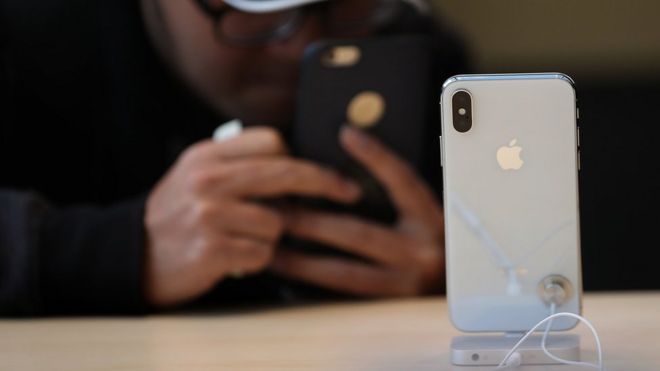
| The new iPhone X started selling in November |
Apple sold slightly fewer iPhones in
the final three months of 2017 than it did the year before, but higher
prices compensated for the dip.
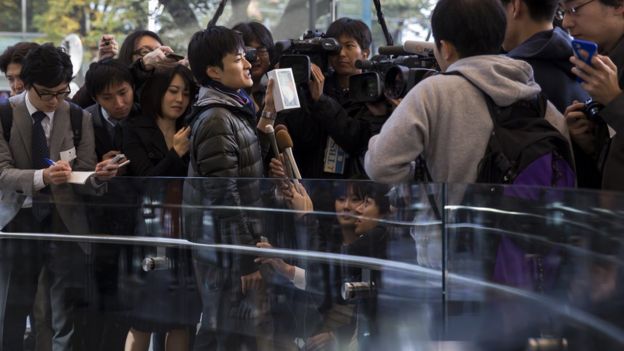 |
| Apple revenue in Japan for the final three months of 2017 increased by 26% compared to the period in 2016 |
After an initial fall, Apple shares climbed more than 3% in after-hours trade. Apple released the iPhone X in November, coinciding with the 10th anniversary of the device.
And while the overall number of iPhones sold in the period slipped by 1% year-on-year to 77.3 million, the iPhone X had been the top-selling Apple handset every week since its launch, Mr Cook said.
However the tech giant also issued a weaker-than-expected sales forecast for coming months, which appears to reinforce investor concerns that demand for Apple products may be dimming.
Timid quarter, but not problematic
Analysis: Dave Lee, BBC North America technology reporter, San FranciscoLast year Apple launched three new iPhones, but one was not like the others. The iPhone X was the main event, the talk of the town.
In contrast, the iPhone 8 and 8 Plus felt obsolete before Tim Cook had even finished his presentation. Investors were worried that the presence of the iPhone X would put off people buying the cheaper iPhones.
And, given the X started at $999, those people may decide not to buy an iPhone at all. And that appears to be basically what happened.
Apple sold marginally fewer iPhones compared with this time last year (though the company blamed that on a shorter accounting period compared with the same time in 2016).
With the average selling price going up by around $100, to $796, it means Apple may be selling fewer iPhones, but it is making more from each one.
Apple investors will be seeing it like this: selling fewer iPhones but dramatically upping the price is certainly one way to solve that ever-present supply chain headache. So, a timid quarter by Apple's unparalleled standards. But by no means a problem.