 |
| Her career took off after playing the Countess in The Marriage of Figaro |
Dame Kiri Te Kanawa, one of opera's most celebrated stars, has told the BBC she will never sing in public again.
"I don't want to hear my voice," said the soprano, whose career has spanned more than half a century.
"It is in the past. When I'm teaching young singers and hearing beautiful young fresh voices, I don't want to put my voice next to theirs."
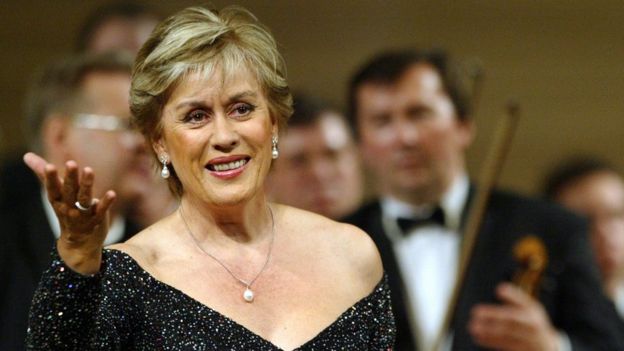 |
| Dame Kiri runs her own Foundation to support young New Zealand singers |
"I've had such an amazing career," the New Zealander said. But she was adamant she wanted to decide "when it was going to be the last note".
However, she admitted it took her five years "to say the goodbye in my own mind", adding: "I've taken that time."
What turned out to be her final performance was a concert in Ballarat near Melbourne in Australia last October. "Before I'd gone on, I said, right, this it. And that was the end."
Dame Kiri, who is of part-Maori ancestry, said she had no regrets and doesn't miss singing. She said: "Look what I had. The memories are lovely."
She has certainly achieved a level of fame rare for a classical performer. Six hundred million people heard her sing Let the Bright Seraphim by Handel at the wedding of the Prince and Princess of Wales in 1981.
"I was told two or three months before, you will sing this song," she revealed. "Can you imagine holding that inside you for months and months, not being able to mention it to anyone?"
But after the death of the Princess of Wales in 1997, she never sang it again. "I never wanted to," she said. "When she died, I felt that I should put that song away forever."
She has not even listened to the piece again since then. "In sort of respect for her, and the death and everything about it was such a terrible thing that I never wanted to hear it again."